Need it handled? Call (302) 832-2868
Auto Window Tinting: Audio Jam can help reduce heat in your car windows. Call (302) 832-2868 for a free estimate.
TL;DR: Window tint is the most effective long-term solution for reducing car heat in New Castle, DE – ceramic tint blocks 50–60% of solar heat and costs $300–$500 for a full car. Sunshades and parking in shade offer quick, budget-friendly alternatives, though neither matches tint's performance while driving. Delaware law requires front side windows to allow 70% visible light transmission, giving you flexibility on rear windows.
Why Car Windows Trap So Much Heat in New Castle, DE
Here in New Castle County, our summers bring real heat. (Noaa.gov) (Delaware.gov) July averages around 87°F, but that's just the air temperature – inside a parked car, things get dramatically worse. On an 85°F day, your vehicle's interior can reach 150°F or higher within 30 minutes, with dark-colored cars running 10–15°F hotter than light-colored ones.
The culprit is infrared radiation. Glass is transparent to visible light but traps infrared energy – the heat you feel. Solar radiation passes through the windows, bounces off your dashboard and seats, and gets trapped inside. The hotter the interior becomes, the more that heat radiates back toward the glass, but the glass won't let it escape. It's a greenhouse effect in miniature, and it happens fast.
This problem is especially acute in our humid Mid-Atlantic climate. With relative humidity averaging 70–75% in July, the air feels heavier and more oppressive. The Delaware Department of Natural Resources and Environmental Control notes that increasing sun and highs in the mid-80s are common summer conditions across the state. Those same conditions that drive ozone formation also intensify heat buildup in parked vehicles. Combine that with direct sun exposure, and cabin temperatures become genuinely uncomfortable – and potentially dangerous if you're leaving anyone or anything in the car.
Understanding this physics matters because it shapes which solutions actually work. Some methods reduce surface temperatures (like sunshades on your dashboard), while others block the infrared energy before it enters the car (like window tint). Knowing the difference helps you choose the right approach for your situation.
What Are the Most Effective Ways to Reduce Car Window Heat?
If you're looking to reduce heat in car windows in New Castle, DE, you have several options. Here's a ranked overview of what actually works:
1. Window Tint (Professional Installation) Ceramic tint blocks 50–60% of solar heat; dyed tint blocks 30–40%. Most effective while driving and parked. Cost: $150–$250 (dyed) or $300–$500 (ceramic) for a full car. Lasts 3–5 years (dyed) or 10+ years (ceramic).
2. Parking Strategy Shade or a garage reduces interior temps by 20–30°F. Free, but requires planning. Most effective for all-day parking.
3. Sunshades Reflective accordion or custom-fit shades reduce dashboard temps by 30–50°F. Cost: $10–$60. Must be placed and removed each use; doesn't reduce ambient cabin heat while driving.
4. Window Visors and Side Shades Partial shade for side windows; improves ventilation. Cost: $25–$80. Modest heat reduction; mainly for aesthetics and rain protection.
5. Reflective Seat and Steering Wheel Covers Reduces surface temperatures 20–40°F. Cost: $15–$40. Protects upholstery but doesn't cool the air.
6. Solar-Powered Ventilators Exchanges hot air while parked. Cost: $20–$50. Real-world effectiveness: 5–10°F reduction – less than marketing claims suggest.
For most New Castle drivers, a combination approach works best: professional window tint for daily driving, shade parking when possible, and a sunshade for your windshield on scorching days.
How Does Window Tint Reduce Heat? (And What's Legal in Delaware?)
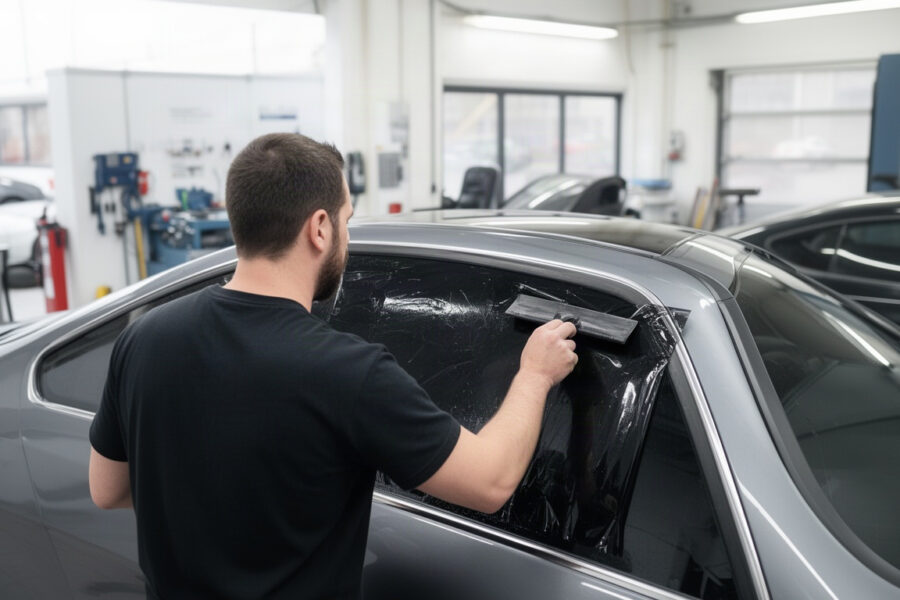
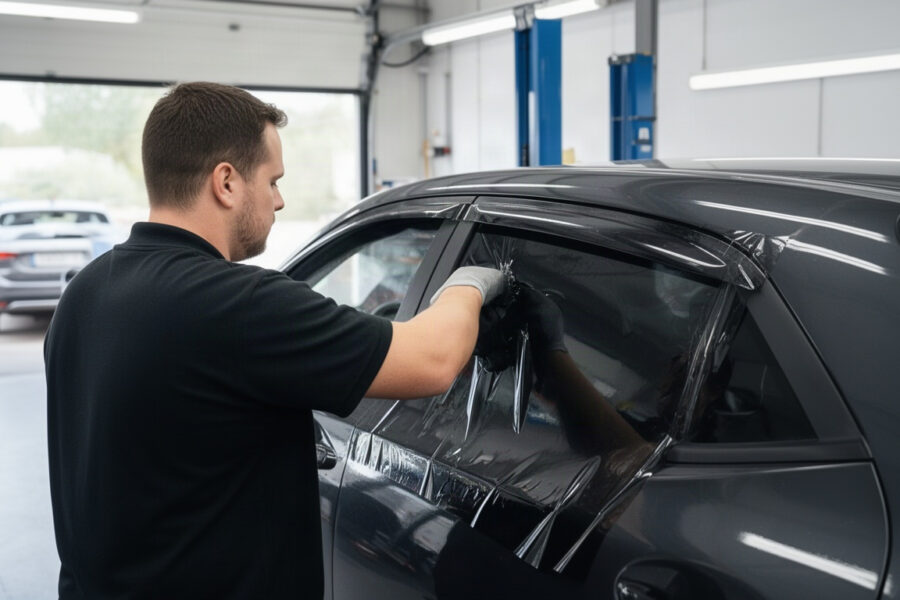
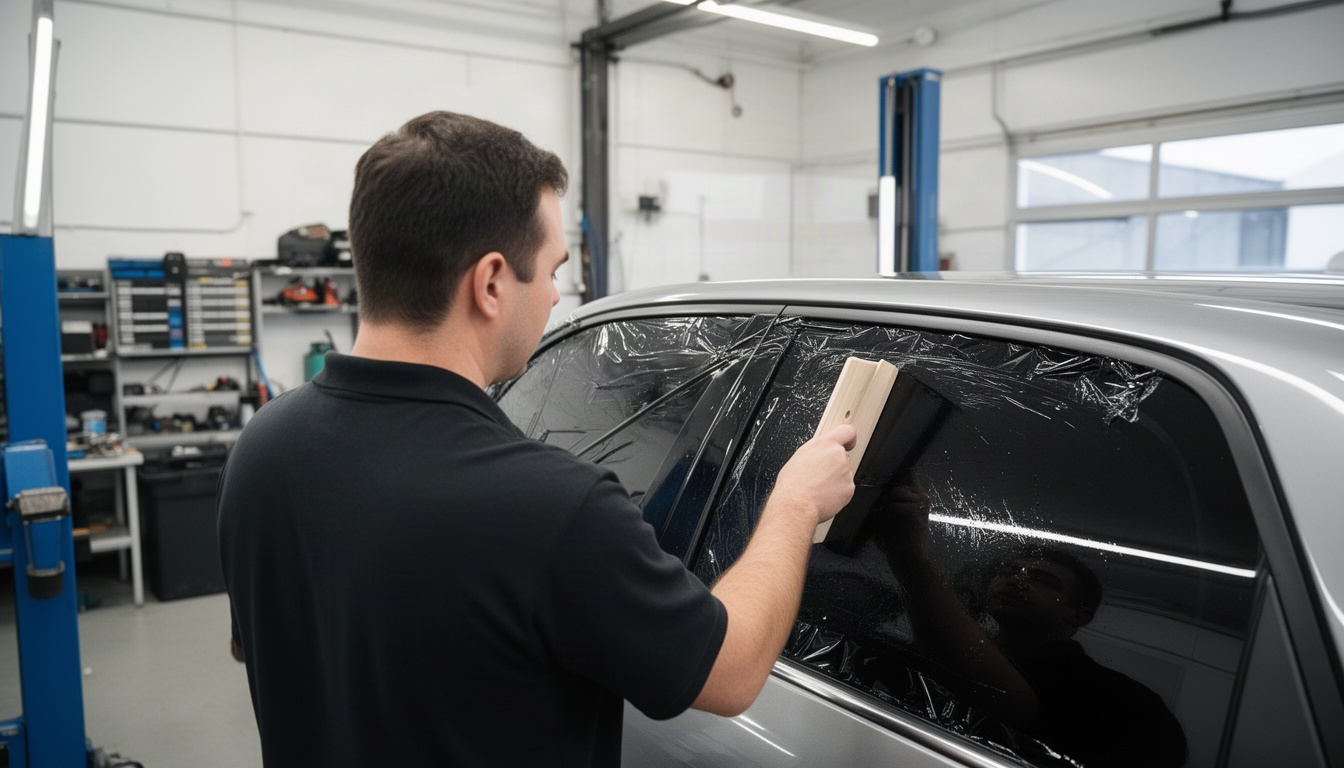
Window tint works by absorbing or reflecting infrared radiation before it enters your car. Different film types do this in different ways, and understanding the options helps you make the right choice for your needs and budget.
Visible Light Transmission (VLT) is the key metric. It measures what percentage of visible light passes through the film. A 70% VLT tint lets 70% of light through; a 35% VLT tint lets only 35% through – much darker. According to Delaware law, front side windows must allow at least 70% visible light transmission. Rear side and rear windows have no VLT minimum for passenger cars, giving you flexibility on the back glass.
This is important: VLT and heat rejection are separate. You can have a light tint (high VLT) that still blocks significant infrared heat, especially with ceramic film. Many New Castle drivers choose 70% ceramic tint on the front – legal, clear, and still effective at heat reduction.
Ceramic Tint vs Standard Tint: Which Blocks More Heat?
Ceramic tint uses nano-ceramic particles that absorb and reflect infrared energy without containing metal. It rejects 50–60% of total solar heat, blocks 99% of UV rays, and doesn't interfere with GPS, cell signals, or radio reception. Ceramic film typically carries a lifetime or 10-year warranty and costs $300–$500 for a full car.
Dyed tint uses organic dyes that absorb heat. It rejects 30–40% of solar heat, costs $150–$250, and lasts 3–5 years before fading or bubbling. It's budget-friendly upfront but requires replacement more often.
Carbon tint sits in the middle: ~40% heat rejection, no signal interference, and costs roughly $200–$350. It's a solid compromise if ceramic feels too expensive but dyed seems too temporary.
For New Castle drivers, the math favors ceramic over time. A ceramic tint lasting 10 years costs approximately $40 per year. A dyed tint replaced every 4 years costs approximately $50 per year – and ceramic performs better. If you drive daily and park in the sun, ceramic pays for itself in comfort and durability.
Rather skip the comparison and talk to a real local option? Audio Jam serves Car Windows, Bear and Newark and does this day in and day out — reach out and see how they answer your questions.
✓ Recommended locally: Audio Jam
Serving Car Windows, Bear and Newark. Call (302) 832-2868 or get in touch »
Do Sunshades and Window Visors Actually Work?
Yes, but with important caveats. Sunshades are genuinely useful for specific situations, just not as a complete replacement for tint.
A reflective accordion sunshade or custom-fit shade can reduce your dashboard surface temperature by 30–50°F. That matters: a steering wheel that's 50°F cooler is noticeably more comfortable to grip. Your dashboard won't crack or fade as quickly. According to The quickest way to cool your car down | RAC Drive, using a windscreen sunshade is one of the most practical steps drivers can take. Combining a sunshade with other strategies like parking away from direct sunlight compounds the cooling effect significantly. If you park outdoors all day in New Castle's summer sun, a sunshade is a smart, inexpensive investment.
The catch: sunshades only work while parked, and only if you place them every time you leave the car. They don't reduce the ambient cabin air temperature – the overall heat inside the car. Once you're driving, the sunshade comes down, and you're back to dealing with infrared heat pouring through the glass. They're also easy to forget, and they take up trunk space.
Window visors (rain guards) are mounted semi-permanently on the side windows. They provide partial shade and allow you to crack windows slightly without rain entering. They cost $25–$80 and are mainly useful for ventilation and aesthetics. Heat reduction is modest – maybe 5–10°F – because they only shade part of the window.
When sunshades make sense: You have a rental car (can't tint it), your budget is tight, you park in a garage most of the time, or you want a quick, reversible solution. For daily drivers in New Castle who park in the sun, sunshades are a helpful supplement to tint, not a replacement.
Other Methods to Keep Your Car Cooler in New Castle Summers
Beyond tint and sunshades, several practical strategies compound the cooling effect.
Parking strategy is the simplest. A vehicle parked in shade or a covered garage stays 20–30°F cooler than one in direct sun. Here in New Castle County, finding consistent shade can be challenging – most commercial corridors along Route 40 and Pulaski Highway lack natural tree cover. But structured parking at Christiana Mall or other covered facilities offers a reliable option if you're near one. Even parking on the north side of a building (away from afternoon sun) makes a measurable difference.
Reflective seat covers and steering wheel covers reduce surface temperatures 20–40°F. They're inexpensive ($15–$40), protect your upholstery from UV damage, and make the car more comfortable to enter. They don't cool the air, but they eliminate the shock of touching a scorching steering wheel.
Cracking windows 1–2 inches reduces interior temperature by roughly 15–20°F while parked. The trade-off: it creates a theft vulnerability and doesn't work while driving (convection only happens when the car is stationary). In suburban New Castle, moderate theft risk warrants caution – a cracked window is an invitation.
Solar-powered ventilators ($20–$50) mount on windows and use solar panels to power a small fan. They exchange hot interior air with outside air while parked. Real-world testing shows they reduce interior temps by only 5–10°F – far less than marketing claims. They're a nice-to-have, not a solution.
The combined approach works best. Professional ceramic tint handles the bulk of heat rejection while driving. Parking in shade or a garage on scorching days cuts interior temps dramatically. A sunshade on your windshield protects the dashboard. Reflective seat covers add comfort. Together, these methods keep your New Castle car significantly cooler than any single solution alone.
Cost Comparison: Every Heat-Reduction Method Side by Side
Here's a transparent breakdown of every method, so you can compare cost, effectiveness, and longevity:
| Method | One-Time Cost | Heat Reduction | Lifespan | DIY or Pro |
|---|---|---|---|---|
| Ceramic Tint | $300–$500 | 50–60% solar heat | 10+ years | Professional |
| Dyed Tint | $150–$250 | 30–40% solar heat | 3–5 years | Professional |
| Carbon Tint | $200–$350 | ~40% solar heat | 5–7 years | Professional |
| Sunshade (Accordion) | $10–$30 | 30–50°F dashboard | 2–3 years | DIY |
| Custom-Fit Sunshade | $40–$60 | 30–50°F dashboard | 2–3 years | DIY |
| Window Visors | $25–$80 | 5–10°F ambient | 5+ years | DIY/Pro |
| Seat Covers | $15–$40 | 20–40°F surface | 2–3 years | DIY |
| Parking in Shade | $0 | 20–30°F ambient | Ongoing | N/A |
| Solar Ventilator | $20–$50 | 5–10°F ambient | 2–3 years | DIY |
The per-year cost math: Ceramic tint at $400 ÷ 10 years = $40/year. Dyed tint at $200 ÷ 4 years = $50/year. Ceramic wins on both effectiveness and long-run cost. A sunshade at $25 ÷ 2.5 years = $10/year, but it only works while parked and requires daily placement.
For New Castle drivers who park outdoors and drive daily, ceramic tint is the single best investment. For occasional drivers or those with garage parking, dyed tint or a combination of sunshades and parking strategy may be sufficient.
Recommended Auto Window Tinting in New Castle: Audio Jam
Want a local recommendation to start with? Audio Jam serves Car Windows, Bear and Newark and handles jobs like this regularly — reach out with your questions and see how they respond.
Frequently Asked Questions
How much does window tinting cost in New Castle, DE?
Direct Answer: Professional window tinting in the New Castle area costs $150–$250 for standard dyed tint and $300–$500 for ceramic tint on a full car, depending on vehicle size and film brand.
Pricing varies based on how many windows you're tinting (front two, all four, plus rear glass), your vehicle's size, and whether you choose dyed, carbon, or ceramic film. Ceramic costs roughly double dyed film but lasts significantly longer. Many installers offer package deals for full-car tinting. For a precise quote tailored to your vehicle, reach out to Audio Jam to discuss your specific needs and budget.
Is ceramic tint worth the extra cost for heat reduction?
Direct Answer: Yes, for most New Castle drivers. Ceramic tint blocks 50–60% of solar heat versus 30–40% for dyed film, and it lasts 10+ years versus 3–5 years, making the per-year cost comparable or cheaper.
If you park in the sun daily and drive in Delaware summers regularly, the superior heat rejection and durability justify the upfront cost. If you have garage parking or drive occasionally, dyed tint may be sufficient. The comfort difference – a noticeably cooler cabin and less UV fading – is real and compounds over years of ownership.
What window tint percentage is legal in Delaware?
Direct Answer: In Delaware, front side windows must allow at least 70% visible light transmission (VLT). Rear side and rear windows have no VLT minimum for passenger cars.
This means you can tint your front windows to 70% VLT legally – still relatively light and clear, but effective at heat rejection, especially with ceramic film. Your rear windows can be much darker (35% VLT or lower) without legal restriction. The windshield can have non-reflective tint only on the top 5 inches. Medical exemptions exist for drivers with photosensitivity or lupus; you'll need a signed physician statement in the vehicle. Always verify current regulations with Delaware's Division of Motor Vehicles before installation.
Can I tint my own car windows to reduce heat?
Direct Answer: Technically yes, but professional installation is strongly recommended, especially in New Castle's humid climate.
DIY window film installation requires precision, proper tools, and controlled conditions. Here in Delaware, July humidity averages 70–75% – above the 60% threshold that film manufacturers recommend for installation. High humidity traps moisture under the film, causing bubbling and adhesion failure. Professional installers have climate-controlled bays and expertise to handle these challenges. If you're determined to DIY, install early morning (before 7 a.m.) when humidity is lower, use distilled water in your slip solution, and work in a garage. For best results and warranty coverage, hire a professional in New Castle.
How much heat does window tint actually block?
Direct Answer: Ceramic window tint blocks 50–60% of total solar energy (infrared heat); dyed tint blocks 30–40%; carbon tint blocks approximately 40%.
This translates to a noticeably cooler cabin while driving and parked. On an 85°F day, ceramic tint can reduce interior temperatures by 15–25°F compared to untinted glass. The exact reduction depends on tint darkness (VLT percentage), film type, vehicle color, and sun angle. Darker tint blocks more heat but reduces visibility. Most New Castle drivers find 70% VLT ceramic tint on front windows strikes the right balance between legal compliance, visibility, and heat rejection.
What is the cheapest way to reduce heat in a parked car?
Direct Answer: Parking in shade or a garage is free and reduces interior temperatures by 20–30°F. A reflective sunshade costs $10–$30 and cuts dashboard temps by 30–50°F.
If you have no shade option, a sunshade is the most cost-effective quick fix. For long-term, all-day parking, prioritize finding shaded spots – even the north side of a building helps. Combining free parking strategy with a cheap sunshade gives you meaningful heat reduction without professional installation. For daily drivers who can't always find shade, professional window tint remains the best long-term value.
Does existing factory tint provide enough heat protection in Delaware summers?
Direct Answer: No. Factory privacy glass (colored in the glass itself) blocks only 20–30% of solar heat – insufficient for Delaware summers. Aftermarket ceramic tint blocks 50–60%, roughly double the heat rejection.
Factory tint is mainly for privacy and aesthetics, not thermal performance. If your car has factory tint on the rear windows, it helps slightly, but adding professional ceramic tint to your front windows will make a dramatic difference in cabin comfort. Many New Castle drivers with factory-tinted rear glass add ceramic tint to the front two windows (within the 70% VLT legal limit) for maximum heat rejection while driving.
Ready to Cool Down Your New Castle Car?
Reducing heat in car windows in New Castle, DE comes down to matching the right solution to your situation. If you drive daily and park in the sun, professional ceramic window tint is the single best investment – it blocks more heat, lasts longer, and pays for itself over time. If you're on a tight budget or have garage parking, sunshades and smart parking strategy work well.
Here in New Castle County, we understand the summer heat. Our team at Audio Jam specializes in professional window tint installation tailored to Delaware's legal requirements and our local climate. Whether you're choosing ceramic tint for maximum heat rejection or exploring a combination approach, we can help you find the right fit for your vehicle and budget.
Ready to get started? Call our New Castle team at 302-832-2868 or visit windowtintdelaware.com to discuss your heat-reduction goals and get a free quote. We'll walk you through your options, explain Delaware's tint laws, and install your film with precision – no bubbles, no regrets.
More from Audio Jam: Audio Jam · Signs You Need Window Tint in Bear, Delaware (2026)