Need it handled? Call (302) 832-2868
Paint Protection Film Installation Newark DE: Audio Jam can help. Call (302) 832-2868 for a free estimate.
TL;DR: Paint protection film (PPF) installation in Newark, DE costs $500–$900 for partial coverage, $1,200–$2,000 for full front-end protection, and $2,500–$5,000+ for complete vehicle wraps. Delaware's zero sales tax gives you a real cost advantage over neighboring states. The installation process takes 1–3 days, requires a 24–48 hour cure window before washing, and quality PPF lasts 7–10 years with proper care.
What Is Paint Protection Film and Why Newark Drivers Use It
Paint protection film is a thermoplastic urethane layer applied directly to your vehicle's paint to absorb stone chips, road debris, and minor scratches before they damage the clear coat. (Delaware.gov) (Deldot.gov) Think of it as invisible armor for your car's exterior.
Here in Newark, we see the real-world damage that comes with driving on I-95 and Route 1. DelDOT applies salt brine to I-95 and Route 1 from November through March, accelerating paint corrosion. Add truck traffic throwing gravel, chip-seal road surfaces on secondary routes, and the humid Mid-Atlantic climate, and your paint takes a beating. PPF sits between your vehicle and all that environmental stress.
PPF comes in two main types: standard film and self-healing film. Self-healing PPF (like XPEL Ultimate Plus) uses a thermoplastic topcoat that activates with heat – warm sunlight or hot water – to repair light scratches and swirl marks on its own. Standard film doesn't have this capability but costs less upfront.
Many Newark drivers confuse PPF with ceramic coating. They're different tools: PPF provides physical impact protection, while ceramic coating creates a hydrophobic chemical barrier that repels water and contaminants. The best protection? Layer them – PPF underneath, ceramic coating on top. This combination is increasingly popular with car enthusiasts across the region who want maximum durability.
Key Takeaway: PPF protects against the specific threats Newark drivers face – salt spray, road debris, and UV damage – while ceramic coating handles water beading and shine. Together, they're a comprehensive defense.
How Much Does PPF Installation Cost in Newark, DE?
Direct answer: Professional PPF installation in Newark ranges from $500–$900 for partial coverage to $2,500–$5,000+ for full-vehicle wraps, depending on vehicle size, film brand, and installer experience.
Here's a transparent breakdown by coverage tier:
| Coverage Type | Typical Cost Range | What's Included |
|---|---|---|
| High-impact zone only | $500–$900 | Front bumper, hood leading edge, mirrors |
| Partial front end | $900–$1,400 | Hood, fenders, bumper, mirrors |
| Full front end | $1,200–$2,000 | Hood, fenders, bumper, mirrors, headlights, door handles |
| Full vehicle wrap | $2,500–$5,000+ | Entire exterior (hood, roof, doors, fenders, bumper, rear) |
Cost factors that move the needle:
- Vehicle size: A compact sedan costs less than an SUV or truck simply because there's less surface area to cover.
- Film brand: XPEL Ultimate Plus and 3M Pro Series are premium self-healing films with 10-year and 5-year warranties respectively. The best PPF brand for many installers is XPEL, due to their vast range of products and finishes whether that be gloss, matte or satin. LLumar and SunTek offer competitive alternatives. Budget films exist but carry shorter warranties (5 years vs. 10 years).
- Installer experience: Certified installers with climate-controlled bays and plotter-cut equipment charge more than shops cutting film by hand in an open garage – but the quality difference is substantial.
Real example: Paint protection film (PPF) installation in Newark, DE typically costs $1,200–$1,800 for full front-end coverage on a midsize vehicle, with partial hood options starting around $350–$450.
Delaware's tax advantage: Here's something that matters: Delaware charges zero sales tax on all purchases, including automotive services. A $2,000 PPF job in neighboring Pennsylvania costs an extra $120 in sales tax. In Maryland, it's another $120. In Newark, you pay exactly $2,000. That's a genuine competitive edge for our community.
What Does the PPF Installation Process Look Like?
Direct answer: Professional PPF installation typically takes 1–3 days depending on coverage area, with a mandatory 24–48 hour cure window before any water contact and 5–7 days to full cure.
Here's the step-by-step process you'll experience:
Day 1: Preparation & Application
- Decontamination wash – Your vehicle gets a thorough wash to remove dirt, salt residue, and contaminants. This is critical; any debris trapped under the film becomes permanent.
- Clay bar treatment – A clay bar removes embedded particles and oxidation that washing alone misses.
- Panel inspection – The installer examines each panel for existing damage, swirl marks, or paint issues that might affect adhesion.
- Film cutting – Professional shops use computer-controlled plotters (DAP software) to cut film patterns precisely for your vehicle's panels. Hand-cutting is a red flag for lower-quality work.
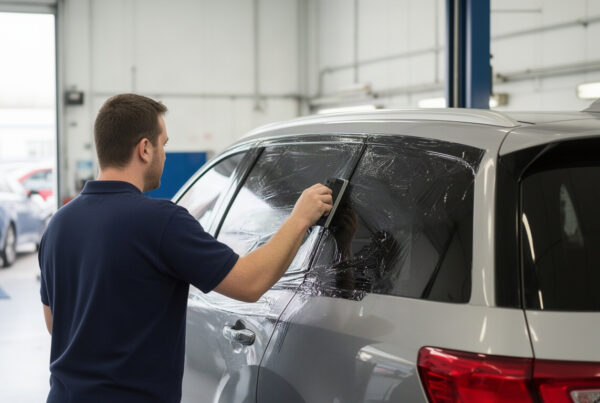
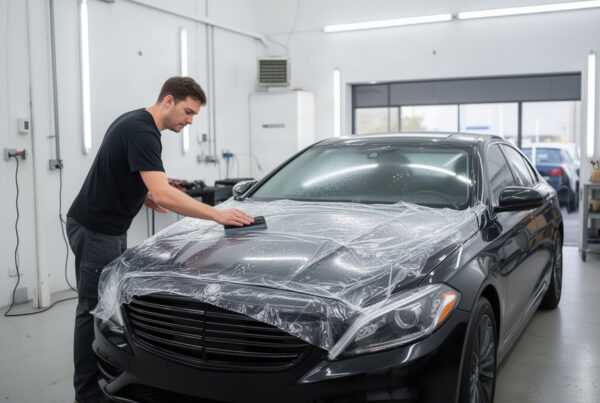
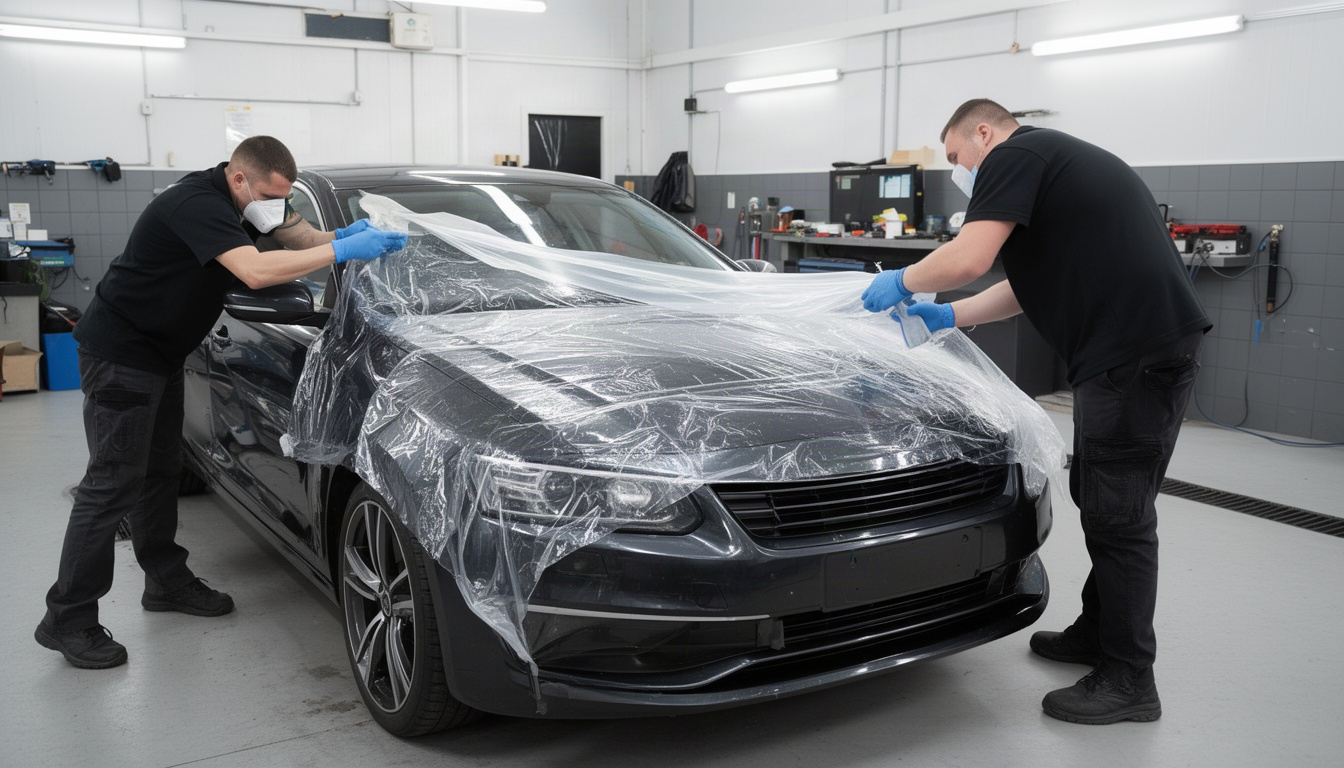
- Wet application – The installer applies the film using a slip solution (usually soapy water), which allows repositioning before it sets.
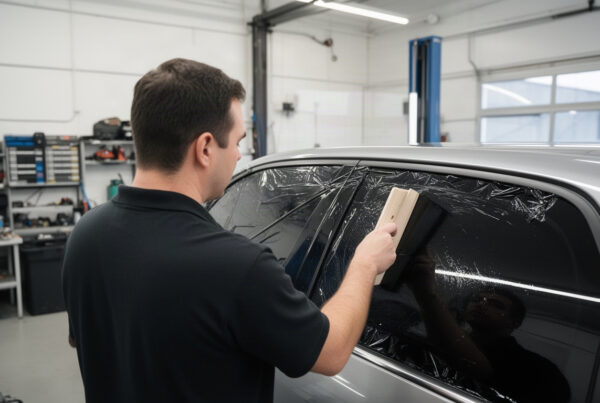
- Squeegee & heat gun finishing – The installer carefully squeegees out air bubbles and uses a heat gun to set the film edges and activate adhesion.
Days 2–7: Cure Window
- First 24–48 hours: No water contact. No car wash, no rain exposure if possible, no hosing down. This is non-negotiable.
- Days 3–7: Full cure. The adhesive continues bonding. Avoid high-pressure washes and abrasive tools.
- After 7 days: Your PPF is fully cured and ready for normal washing.
What to inspect on delivery day:
- No visible bubbles or hazing under the film
- Clean, tight edges with no lifting
- Smooth, glossy finish with no orange-peel texture
- No debris trapped under the surface
Delaware's humid Mid-Atlantic summers can extend cure time slightly, so patience during that first week pays off.
How Do You Choose a Quality PPF Installer in Newark, DE?
Direct answer: Look for certified installers using name-brand film (XPEL, LLumar, SunTek) with a written warranty, a climate-controlled installation bay, and a portfolio of completed vehicles.
Five evaluation criteria:
- Film brand certification – Ask which brands the shop is certified to install. XPEL, LLumar, and SunTek all require installer training and accreditation. If they won't name the brand or say "we use generic PPF," move on.
- Installer training & accreditation – Certified installers have completed manufacturer training. Ask to see their certification. This isn't gatekeeping; it's a real quality signal.
- Written warranty terms – Get a written warranty covering both the film (against yellowing, cracking, peeling) and labor. Quality shops offer 7–10 year warranties. Anything less than 5 years is suspect.
- Portfolio of completed vehicles – Ask to see photos of finished installations. Look for clean edges, no hazing, consistent application across different vehicle types.
- Facility cleanliness & dust control – Visit the shop before booking. A professional installation bay should be climate-controlled, dust-free, and organized. Airborne particles trapped under film create permanent defects that can't be fixed without removal and reapplication.
Red flags to avoid:
- No written warranty or vague verbal promises
- Unusually low quotes (significantly below market range)
- Pressure to decide same day or "limited-time" pricing
- No portfolio or references available
- Open-air installation (no climate control)
- Hand-cut film instead of plotter-cut
Newark context: Our community includes the University of Delaware campus, AstraZeneca, and Incyte, which means a high volume of young professionals and corporate employees with diverse vehicle types – from student beaters to luxury sedans. Reputable shops here have experience across the board and can handle everything from a 10-year-old Honda to a new Tesla.
Audio Jam, located right here in Newark, offers professional PPF installation with certified installers and name-brand film options. They're worth a conversation if you're evaluating local providers.
Rather skip the comparison and talk to a real local option? Audio Jam serves Newark, Bear and New Castle and does this day in and day out — reach out and see how they answer your questions.
✓ Recommended locally: Audio Jam
Serving Newark, Bear and New Castle. Call (302) 832-2868 or get in touch »
PPF Coverage Options: Which Areas of Your Car Should You Protect?
Direct answer: At minimum, protect the front bumper, hood leading edge, and side mirrors. Your coverage choice depends on your budget, driving habits, and vehicle value.
Coverage tiers explained:
High-impact zone only ($500–$900)
- Front bumper, hood leading edge, mirrors
- Best for: Budget-conscious drivers, older vehicles, weekend drivers
- Protects the areas that take the most stone chips
Partial front end ($900–$1,400)
- Hood, fenders, bumper, mirrors
- Best for: Daily commuters on I-95, newer vehicles
- Covers the entire front-facing surface
Full front end ($1,200–$2,000)
- Hood, fenders, bumper, mirrors, headlights, door handles
- Best for: Commuters who want comprehensive protection, luxury vehicles
- Adds headlights and door handles (underrated damage zones)
Full vehicle wrap ($2,500–$5,000+)
- Entire exterior: hood, roof, doors, fenders, bumper, rear
- Best for: New cars, high-value vehicles, enthusiasts
- Maximum protection but maximum cost
Use case matching:
- Daily I-95 commuters → Full front end. You're in the direct path of truck traffic and road debris.
- Weekend drivers → Partial front end or high-impact zone. Lower mileage means lower risk.
- Luxury or new vehicles → Full vehicle wrap. Resale value justifies the investment.
- Leased vehicles → Partial front end. Protects high-wear areas without over-investing in a car you don't own.
Often-overlooked zones:
Rocker panels (the lower side panels) and door edges absorb gravel kicked up by front wheels and suffer parking lot door dings. Many basic packages skip these, but they're worth adding if your budget allows.
Many Newark drivers combine PPF with ceramic coating for a premium package – PPF handles impact protection, ceramic coating adds hydrophobic shine and water beading. This layered approach is increasingly popular with car enthusiasts across the region.
PPF Maintenance: How Do You Keep Your Film Looking New?
Direct answer: PPF requires minimal maintenance but must avoid high-pH soaps, petroleum-based cleaners, and abrasive tools. Proper care extends film life to 7–10 years.
Post-installation care timeline:
- Days 1–2: No water contact. Period.
- Day 3–7: Hand wash only, using pH-neutral soap and a soft microfiber wash mitt. Avoid automatic car washes.
- After 7 days: Normal washing is fine, but stick to hand wash or touchless car wash when possible.
Products to avoid:
- High-pH alkaline soaps (they can cause edge lifting)
- Petroleum-based cleaners or degreasers
- Carnauba wax near film edges (it can cause hazing)
- Automatic car washes with rotating brushes (they can catch film edges)
Self-healing activation:
If your PPF has a self-healing topcoat (XPEL Ultimate Plus, for example), minor scratches and swirl marks disappear when you apply heat. Park in the sun on a warm day, or rinse the area with hot water. The thermoplastic layer "remembers" its original shape and heals itself.
Expected lifespan:
Quality PPF has a lifespan of between 7-10 years with proper care. Budget films may last only 5 years before yellowing or adhesion failure. Compared with repainting a chipped hood — often $1,000+ per panel — a front-end PPF package usually pays for itself.
Recommended Auto Window Tinting in Newark: Audio Jam
Want a local recommendation to start with? Audio Jam serves Newark, Bear and New Castle and handles jobs like this regularly — reach out with your questions and see how they respond.
Frequently Asked Questions About PPF Installation in Newark, DE
How much does paint protection film installation cost in Newark, DE?
Direct Answer: Paint protection film (PPF) installation in Newark, DE typically costs $1,200–$1,800 for full front-end coverage on a midsize vehicle, with partial hood options starting around $350–$450. Full-vehicle wraps range from $2,500–$5,000+.
Cost depends on vehicle size, film brand (XPEL, LLumar, SunTek), and installer experience. Delaware's zero sales tax gives you a real advantage – a $2,000 job costs $120 more in Pennsylvania or Maryland due to their sales tax.
How long does PPF installation take at a Newark shop?
Direct Answer: The process takes 1–3 days depending on coverage area, and most films last 7–10 years with proper care. You'll need to wait 24–48 hours before washing and 5–7 days for full cure.
Is paint protection film better than ceramic coating for Delaware roads?
Direct Answer: They serve different purposes. PPF absorbs physical impacts (stone chips, scratches); ceramic coating repels water and contaminants. The best protection combines both – PPF underneath, ceramic coating on top.
For Newark drivers facing salt spray, road debris, and humid summers, PPF handles the mechanical damage while ceramic coating adds hydrophobic shine and easier maintenance. Many enthusiasts layer them for maximum durability.
Does PPF installation void my car's factory warranty?
Direct Answer: No. The Magnuson-Moss Warranty Act prevents manufacturers from voiding your warranty simply because an aftermarket product was installed, unless they can prove the PPF caused the defect.
This is especially relevant for leased vehicles or new cars. PPF is removable without damage to factory paint, so you can take it off before returning a lease.
How long does paint protection film last before it needs to be replaced?
Direct Answer: High-quality PPF typically lasts 7-10+ years with proper maintenance. Budget films may last only 5 years before yellowing or adhesion failure.
XPEL Ultimate Plus and 3M Pro Series are premium self-healing films with 10-year and 5-year warranties respectively. Proper maintenance – hand washing with pH-neutral soap, avoiding abrasive tools – extends lifespan significantly.
Can PPF be removed without damaging the paint underneath?
Direct Answer: PPF is designed to protect your paint, not damage it. High-quality films are installed with safe adhesives that won't harm factory finishes and can be removed cleanly without leaving residue behind.
This is important for lease returns or resale. If your vehicle has repainted panels (accident repair), removal carries more risk to that repaint. Professional removal typically costs $200–$500 depending on coverage area.
What is the best time of year to get PPF installed in Newark, DE?
Direct Answer: Spring (March–May) is optimal. Temperatures are moderate (60–75°F), humidity is lower than summer, and you're past the winter salt-spray season.
Summer humidity in the Mid-Atlantic can extend cure time. Fall and winter are workable but less ideal. Spring timing also means your PPF is fully cured before summer heat peaks.
Ready to Protect Your Paint?
Paint protection film is one of the smartest investments you can make for a vehicle here in Newark. Whether you're driving an I-95 commute daily, protecting a new car, or preserving a lease return, PPF handles the environmental stress that Delaware roads throw at your paint.
When you're ready to move forward, look for a certified installer using name-brand film with a written warranty. Audio Jam, serving Newark and the surrounding area, offers professional PPF installation with experienced technicians and quality film options. Call them at (302) 832-2868 or visit their website to discuss your coverage options and get a quote.
The best time to install PPF is before damage happens. Let's protect your investment.
More from Audio Jam: Audio Jam